
Extrait de Parfum vs Eau de Parfum: The Complete Guide to Fragrance Concentration
Understanding concentration changes everything — longevity, projection, price, and when to wear what. Here’s the expert breakdown you’ve been missing.
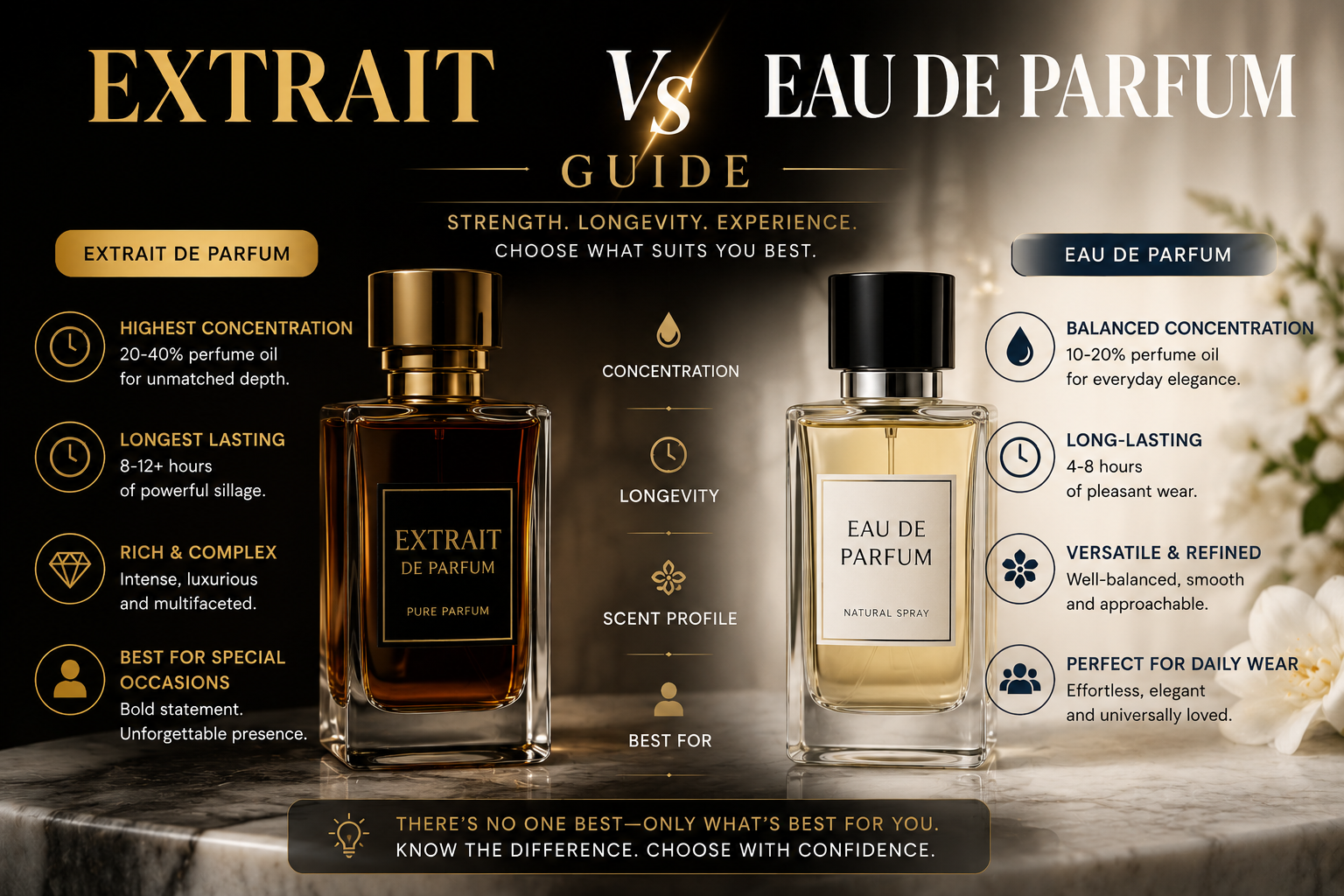
You’re standing at the fragrance counter, or scrolling through a product page, and you see it: the same fragrance listed twice. One bottle says Eau de Parfum. The other says Extrait de Parfum. The Extrait is $60 more. The description is nearly identical. What are you actually paying for?
This is one of the most common — and most costly — points of confusion in the fragrance world. The difference between Extrait de Parfum and Eau de Parfum isn’t marketing fluff. It’s chemistry, wearability, and a fundamentally different experience on skin. Getting it wrong means paying too much for something that doesn’t suit your lifestyle, or missing out on a scent experience that could genuinely change how you wear fragrance.
This guide breaks down every fragrance concentration level — from Extrait down to Eau Fraîche — so you can buy with confidence. And as DryDown Dairies’ foundational concentration guide establishes, understanding these labels is the single most important skill in building a fragrance wardrobe.
“Concentration doesn’t just determine how long a fragrance lasts — it changes the character of the scent itself, the way it opens, and how it behaves on your skin.”
Fragrance Concentration Levels at a Glance
Every fragrance is a blend of aromatic compounds dissolved in alcohol. The fragrance concentration percentage — how much of that blend is pure aromatic oil versus alcohol — determines everything else. Here’s the full spectrum, from richest to lightest:
de Parfum
Parfum
Toilette
Cologne
Fraîche
These ranges are industry conventions, not legal definitions — so two fragrances both labeled “Eau de Parfum” can have quite different oil concentrations within that band. As explored in DryDown Dairies’ deep-dive on what fragrance labels actually mean, some houses intentionally sit at the high end of a category to signal quality without moving to the next tier.
Extrait de Parfum vs Eau de Parfum: Head-to-Head Comparison
Before we break down each concentration in depth, here’s the direct comparison most readers are looking for — structured for quick reference and the buying decisions that follow.
| Feature | Extrait de Parfum | Eau de Parfum |
|---|---|---|
| Concentration | 20–40% aromatic oil | 15–20% aromatic oil |
| Longevity | 10–14+ hours | 6–10 hours |
| Projection / Sillage | Intimate, close-to-skin | Moderate — noticeable in a room |
| Alcohol Content | Lower — softer opening | Higher — crisper, more immediate opening |
| Scent Character | Richer, deeper, more complex drydown | More vibrant top notes, balanced arc |
| Price | £££ — premium tier | ££ — mid to premium range |
| Application | Dab or 1–2 sprays; less is more | 2–4 sprays on pulse points |
| Best Season | Fall, winter, cool evenings | Year-round; highly versatile |
| Best For | Date nights, intimate wear, collectors | Daily wear, office, gifting, versatility |
| Skin Scent Quality | ⭐⭐⭐⭐⭐ Exceptional | ⭐⭐⭐⭐ Very good |
The short answer: Extrait de Parfum is not simply “stronger” than Eau de Parfum. It behaves differently. Lower alcohol means the top notes open more softly and slowly, the base notes bloom earlier, and the overall experience is more intimate — designed to be discovered up-close rather than announced across a room.
For a collector’s perspective on when each format genuinely justifies its price, DryDown Dairies’ analysis of whether Extrait is worth the premium offers an honest cost-per-wear breakdown.
Extrait de Parfum: The Richest Concentration Explained
Extrait de Parfum — sometimes called Pure Parfum or simply Parfum — is the oldest and most concentrated fragrance format. Before modern alcohol-based sprays existed, perfumers worked almost exclusively with concentrated oils applied directly to skin. Extrait is the closest modern equivalent.
What Makes Extrait Different on Skin
The lower alcohol content does two things simultaneously. First, it eliminates the sharp opening blast that many EDPs have — the alcohol “bite” some people find harsh or headache-inducing. The Extrait opens softly, almost imperceptibly, before blooming into its full character.
Second, the higher oil concentration means the base notes are more prominent from the start. Where an EDP of the same fragrance might spend 30 minutes in its citrus or floral top phase, an Extrait version reaches its heart and base more quickly — which is why Extraits often smell “warmer” and more complex immediately upon application.
✅ Extrait Advantages
- Exceptional longevity (often 12+ hours)
- Richer, more complex character
- Softer, less alcohol-forward opening
- Intimate, skin-close sillage
- Less can go further — economical per use
- Prestige bottle formats (often dabbers)
❌ Extrait Considerations
- Significantly higher price
- Lower projection — not for room presence
- Oilier formula can stain delicate fabrics
- Fewer fragrances available in this format
- Can feel “too heavy” in summer heat
- Less forgiving if you dislike the scent
Eau de Parfum: The Versatile Everyday Standard
Eau de Parfum has become the dominant format in modern perfumery for good reason. At 15–20% concentration, it strikes the sweet spot between presence, longevity, and wearability that suits most people’s daily fragrance needs.
Most of the designer fragrances you know by name — the ones that built reputations, won awards, became cultural references — launched and achieved their fame as Eau de Parfum formulas. The format’s slightly higher alcohol content gives the opening act its clean, crisp projection: those first 20–30 minutes where a fragrance fills a room and announces itself.
Why EDP Dominates Daily Wear
The EDP format’s projection is genuinely useful in social settings. Where an Extrait whispers, an EDP speaks at a conversational volume. It’s the fragrance equivalent of showing up: present without being overbearing (when applied correctly).
Six to ten hours of reliable longevity covers most working days and many evenings without the need for reapplication. And the broader availability of fragrances in EDP format means you have vastly more choice. As DryDown Dairies’ ranking of the best Eau de Parfums of 2026 demonstrates, the EDP category contains some of perfumery’s most enduring masterpieces.
✅ EDP Advantages
- Best-in-class projection and sillage
- 6–10 hour longevity for all-day wear
- Vibrant, dynamic opening phase
- Widest fragrance selection available
- Better value per bottle
- Versatile across seasons and settings
❌ EDP Considerations
- Can feel overpowering if over-applied
- Shorter lifespan than Extrait
- Alcohol opening may feel sharp to some
- Less intimate character on skin
The Full Fragrance Concentration Spectrum: EDT, EDC & Beyond
Understanding Extrait vs EDP means more when you see where they sit in the full landscape of fragrance concentration levels. Here’s the complete spectrum with practical buying context for each.
| Concentration | Oil % | Longevity | Best For | Price Tier |
|---|---|---|---|---|
| Extrait de Parfum | 20–40% | 10–14 hrs | Evening, intimate occasions | £££ |
| Eau de Parfum (EDP) | 15–20% | 6–10 hrs | Daily wear, all occasions | ££–£££ |
| Eau de Toilette (EDT) | 8–15% | 4–6 hrs | Casual, sport, hot weather | ££ |
| Eau de Cologne (EDC) | 2–5% | 2–4 hrs | Post-gym, summer refresh | £ |
| Eau Fraîche | 1–3% | 1–2 hrs | Hot climate, layering base | £ |
A Note on Eau de Toilette
EDT often gets unfairly dismissed as a lesser format. But many fragrances are genuinely better as EDTs — lighter, breezier, and more appropriate for their intended character. A citrus summer scent at EDP concentration can become cloying; the same scent at EDT feels effortless. DryDown Dairies’ EDT vs EDP comparison addresses this nuance in full.
Eau de Cologne: Often Misunderstood
In North America, “cologne” is colloquially used for any men’s fragrance. In proper perfumery terminology, Eau de Cologne refers specifically to a light, citrus-forward, 2–5% concentration format — the oldest fragrance style still in production. Brands like 4711 define the category. It’s not inferior; it’s designed for a different purpose entirely.
How to Choose the Right Concentration for Your Fragrance Personality
The “best” concentration is the one that suits how you wear fragrance. Here’s a personality-based framework, expanded from DryDown Dairies’ guide to building a fragrance wardrobe.
The Collector
Owns multiple bottles. Values complexity and depth. Often prefers Extrait for key pieces and EDP for daily drivers.
The Daily Wearer
One signature scent. Needs projection and longevity without fuss. EDP is almost always the right answer.
The Warm-Weather Fan
Prioritises freshness. Reaches for citrus and aquatic notes. EDT often serves them better than EDP in high temperatures.
The Office Wearer
Mindful of fragrance etiquette. Needs moderate projection. EDP applied lightly, or a quality EDT, is the professional sweet spot.
The Evening Specialist
Saves fragrance for special occasions. Wants something memorable and intimate. Extrait rewards this approach most.
The Value-Seeker
Wants performance per pound. Quality EDP at the right price point consistently wins — especially from houses like Lattafa.
For a deeper exploration of matching concentration to occasion and season, DryDown Dairies’ occasion-by-occasion fragrance guide is an essential read.
2026 Trends: How the Market Is Reshaping Fragrance Concentration
The Extrait Renaissance Among Niche Houses
Niche and indie fragrance houses have driven a significant shift toward Extrait formats in the past three years. Brands positioning at the luxury end — Xerjoff, Initio, Amouage — increasingly offer their most prestigious releases exclusively as Extrait, using higher concentration as a marker of product quality rather than simply variant. The result: Extrait de Parfum has acquired aspirational status it hadn’t held since the pre-spray era.
As DryDown Dairies’ 2026 niche fragrance trend report documents, the “quiet luxury” aesthetic sweeping fashion has driven parallel demand in perfumery — Extraits’ intimate, understated projection perfectly aligns with the movement.
Gen Z and the Value-Conscious EDP
Simultaneously, Gen Z buyers are driving the most dynamic growth in the EDP category — but specifically in the affordable-luxury segment. Houses like Lattafa, Armaf, and Pendora have demonstrated that $30–50 EDPs can genuinely rival designer $120+ bottles in performance. TikTok’s #PerfumeTok community has been pivotal in democratising fragrance knowledge, empowering younger buyers to make concentration-informed choices rather than defaulting to brand prestige.
The result: EDP is no longer just the “standard” option — it’s the category where the most exciting value discoveries are happening right now. DryDown Dairies’ guide to the best affordable EDPs covers the standout performers in detail.
Sustainability and Concentration
An underappreciated sustainability argument exists for Extrait: fewer sprays per wear, smaller bottle sizes, and reduced packaging per lifetime of use. As fragrance consumers become more environmentally conscious, the per-use efficiency of concentrated formats is increasingly cited as a genuine consideration — not just a luxury justification. Our sustainable fragrance buying guide explores this angle in full.
Best EDP & Extrait Fragrances for Women: 2026 Recommendations
The following are our top picks across the EDP category for women — ranging from iconic designer houses to niche-adjacent bottles that punch well above their price. Full reviews for each are available in DryDown Dairies’ women’s fragrance review archive.
Best EDP & Extrait Fragrances for Men: 2026 Recommendations
From bestselling designer EDPs to budget-defying oriental Eau de Parfums, these are the men’s fragrances worth your attention — reviewed in depth in DryDown Dairies’ men’s fragrance guide for 2026.
Budget vs Luxury: Concentration and Value — What Actually Matters
Here’s a truth the fragrance industry would rather you didn’t internalize: a higher price doesn’t guarantee a higher-quality concentration. A $30 Lattafa EDP can genuinely outperform a $150 designer EDP in longevity, projection, and even accord complexity.
What price does reflect is the cost of ingredients (naturals vs synthetics), brand positioning, marketing spend, and packaging. An Extrait from a niche house using natural ingredients commands premium pricing for legitimate reasons. An Extrait version of a designer fragrance often uses the same synthetic base as its EDP sibling — just at higher concentration, with a higher price tag.
For a rigorous comparison of budget vs designer fragrance value by concentration tier, DryDown Dairies’ value comparison guide is the definitive resource — including blind comparisons of affordable EDPs against their premium equivalents.
How to Apply Extrait and EDP for Maximum Performance
Extrait Application
- Less is always more. 1–2 targeted applications to warm pulse points (inner wrist, neck) is sufficient. Extrait does not benefit from heavy-handed spraying.
- Don’t rub. Dabbing or light spraying is ideal. Rubbing breaks down the top notes prematurely — a habit worth breaking for any fragrance format, but especially important for Extrait.
- Skin hydration matters. Extrait’s oil content bonds beautifully with moisturised skin. Apply an unscented lotion beforehand for significantly extended longevity.
- Caution on fabrics. The oil-forward formula can leave marks on delicate or light-coloured fabrics. Apply to skin, not clothing.
EDP Application
- Standard pulse point application: wrists, neck, inner elbow. 3–4 sprays for most people is generous without being excessive.
- Hair application — misting lightly onto hair extends EDP longevity dramatically, as hair holds fragrance molecules differently than skin.
- Distance matters: spray from 6–8 inches for even diffusion rather than concentrated patches.
- Avoid over-application in warm weather — EDP’s alcohol content amplifies in heat, making it project significantly more than you intend.
For the full application technique breakdown by occasion and concentration, DryDown Dairies’ guide to applying fragrance correctly covers every scenario.
Frequently Asked Questions: Extrait de Parfum vs Eau de Parfum
The Bottom Line: Which Should You Buy?
Buy an Extrait de Parfum if: you’ve found a fragrance you deeply love and want the richest possible version of it; you wear fragrance for intimate occasions rather than projection; or you’re a collector who values the format’s depth and complexity as part of the experience.
Buy an Eau de Parfum if: you want versatility, projection, a wider selection of fragrances, and reliable all-day performance. For most people, in most situations, the EDP is the format that delivers the best fragrance experience per pound spent.
Don’t dismiss EDT: For fresh, citrus, or aquatic fragrances — and for wear in warm climates — EDT is often the perfumer’s intended format and the genuinely superior choice.
Understanding concentration is the foundation of intelligent fragrance buying. It means you stop paying for marketing positioning and start paying for what actually matters: the right scent, in the right format, for the right moments in your life. For everything else in the fragrance journey, DryDown Dairies covers it all — from beginner guides to collector-level deep dives.